Leeds has become one of the most interesting places in the UK to watch AI develop. Not because of a single breakout company or a government initiative, but because of the range of problems being tackled here.
That could be anything from a vet app that can diagnose a dog’s joint condition from a seven-second video, to a platform rebuilding how factories work from the ground up, or a consultancy helping brands get found in AI search results before their competitors even know the game has changed.
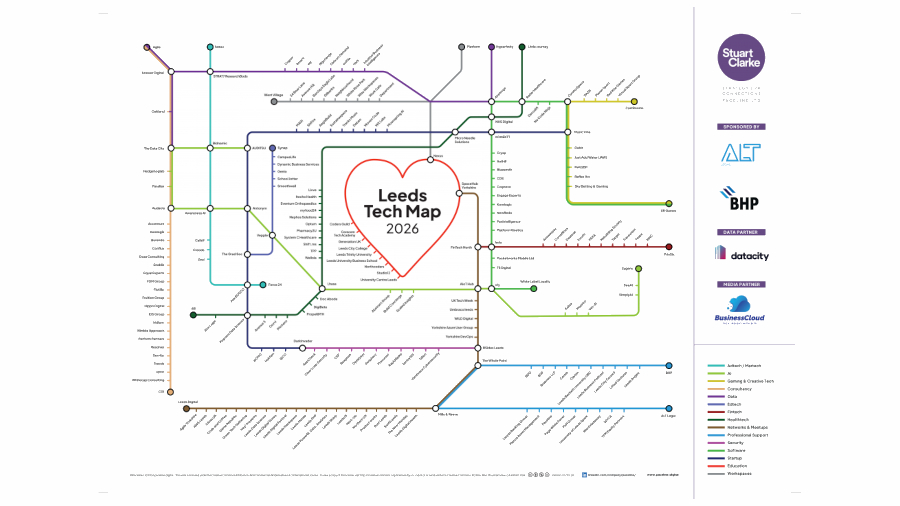
The 15 companies on this list were all featured on the 2026 Leeds Tech Map. Its first iteration launched in 2021, the updated visual asset brings together hundreds of companies across software, data, healthtech, fintech and creative tech, showing at a glance who’s doing what in Leeds and the strength of the region’s tech ecosystem.
Some of the AI companies below are scaling fast. Some are still early. All of them are worth knowing about.
1. hedgehog lab

Digital product consultancy hedgehog lab is making a name for itself in Yorkshire having expanded to Leeds from Newcastle in early 2025. In December it acquired Label Sessions, a global innovation network with more than 500 experts to form a full-stack innovation consultancy. The combined business counts Deliveroo, Under Armour, Aviva and AJ Bell among its clients.
One early product of the partnership is the AI in Government Lab, a joint initiative publishing a weekly briefing on how public sector organisations are turning AI ambition into long-term capability. The consultancy has also blogged about how AI is evolving its approach to building software, with teams building rough, clickable prototypes in hours rather than writing lengthy product specs – getting everyone aligned on what’s being built before a line of code is written.
CEO Sarat Pediredla stepped back from the role earlier this year after nearly 19 years with the business, with Managing Director Malcolm Seagrave now leading the company.
2. AwarenessAI

Founded by entrepreneur Tom Mason, AwarenessAI helps businesses control how AI systems understand, trust, and recommend their brand using a discipline known as Generative Engine Optimisation, or GEO.
The premise is straightforward. According to McKinsey, 44% of AI-powered search users now consider it their primary source of insight, ahead of traditional search. If an AI model misrepresents or ignores your brand, you lose customers without ever knowing it. AwarenessAI’s methodology covers six pillars – clarity, consistency, trust, visibility, freshness and technical foundations – tested across platforms including ChatGPT, Google Gemini, Perplexity and Meta AI.
Its Portal and Dashboard product lets organisations test how AI models describe them across up to 100 structured prompts, surfacing gaps between how they want to be seen and how AI actually represents them.
3. IRLY

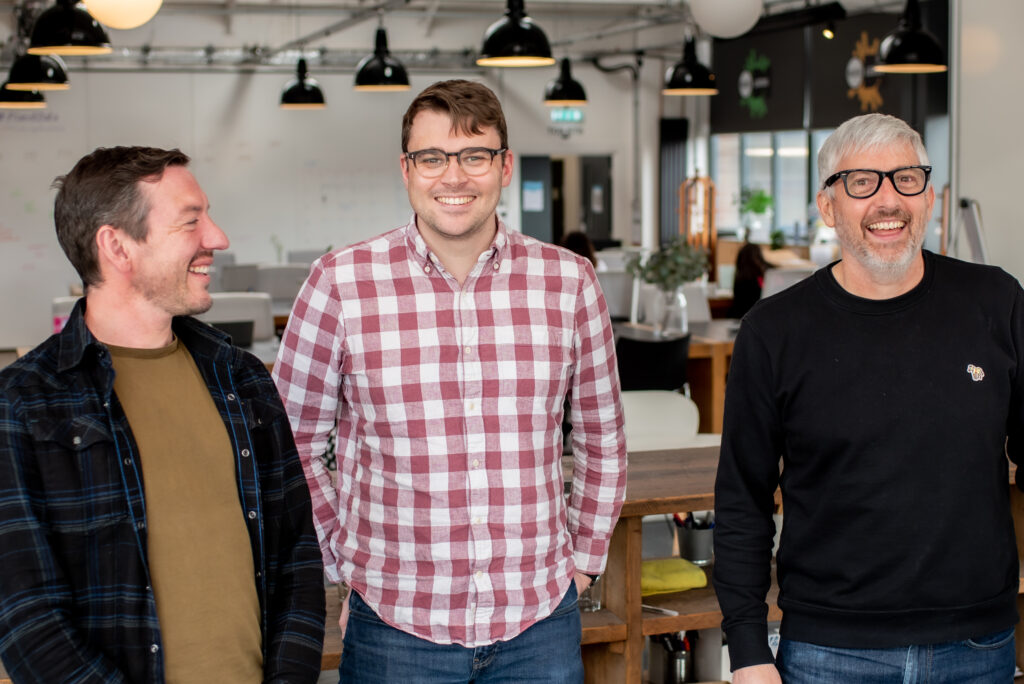
Founded by serial entrepreneur Adam Hildreth (pictured) and David Hunter, IRLY describes itself as AI-native by design, using AI as core infrastructure in how products and companies are conceived, validated and built, rather than layering it on afterwards. Hildreth started his first business at 14, becoming the UK’s youngest CEO. He later founded Crisp, a global trust and safety platform later acquired by Kroll. Hunter led Crisp’s Trust & Safety business before co-founding IRLY.
The company operates across three areas. Its Studios arm builds software for founders and business leaders whose existing technology is slowing them down. Labs partners with and invests in experienced operators who understand a problem and can access buyers but need a technology partner to build with them. Ventures provides infrastructure for startups and their investors from early traction through to scale.
The company’s clients include Patch, a home services platform operating across five counties; Airserve, a hospitality operating platform used by over 100 UK venues; and TemperatureGenie, a cold chain compliance platform serving pharmaceutical, healthcare and logistics businesses.
4. Build Concierge
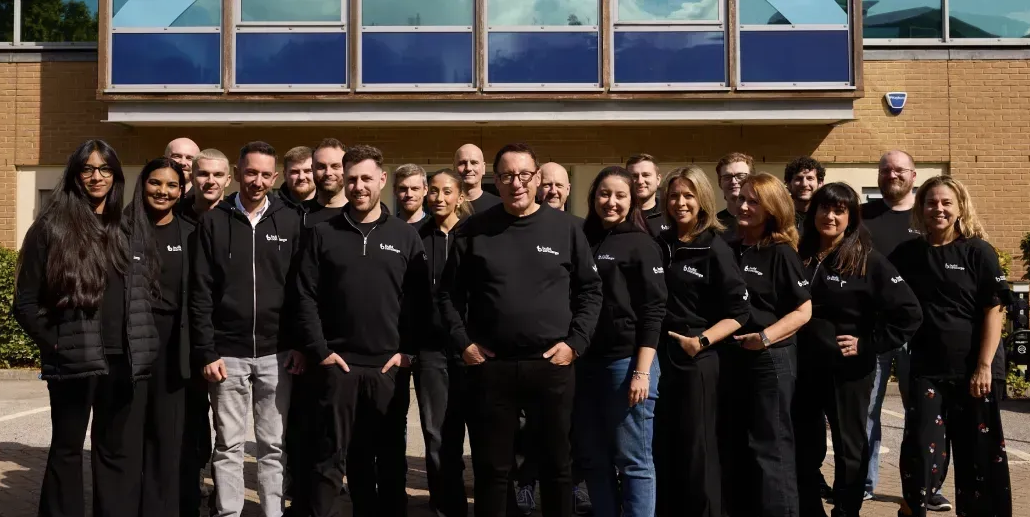
Build Concierge is an AI platform built for trades and service businesses that want to automate the back-office work that consumes their teams’ time. Founder Martin Port previously founded BigChange, a Leeds-based job management software company that was acquired by Simpro Group in 2024.
Port describes customer engagement as “the final frontier for service businesses.” Build Concierge handles calls, messages and bookings, unifying WhatsApp, SMS, calls, email and webchat into a single inbox. Its workflow builder automates repetitive tasks — turning work orders into scheduled jobs, extracting data from emails and documents, assigning SLAs and creating new contacts — all on autopilot.
The startup entered full development in January 2025. By July it had closed a £3.8 million investment round in four weeks, and by September had reached 20 full-time employees and achieved ISO 27001 and ISO 9001 certification.
5. Auditsu

Auditsu’s platform checks whether mobile apps and websites meet legal accessibility standards. The company claims it can reduce what would usually take weeks of manual auditing to a matter of seconds, and at up to 90% less cost.
Founded in 2023 as IMAGINaiTION, Auditsu rebranded in early 2025 ahead of the introduction of the European Accessibility Act in June that year. The act requires businesses selling digital products into the EU to meet specific accessibility standards. In a recent Yorkshire Post column, founder Jason Crispin argued that businesses which haven’t checked their digital products for accessibility have no excuse, with regulators increasingly willing to act.
Auditsu was the only West Yorkshire company selected for the PraeSeed programme in December, receiving £200,000 in funding, and won Start-Up of the Year at the Yorkshire Business of the Year Awards 2026.
6. Zygens

Zygens is an agentic AI consultancy founded in 2025 by Zandra Moore, who previously founded and led enterprise AI platform Panintelligence. It works primarily with financial services and professional services firms, where governance and compliance requirements complicate AI deployment.
Moore describes a gap at the heart of the market: strategy consultancies advise on AI but don’t build the systems, while AI vendors can’t operate safely in regulated environments. Zygens positions itself as doing both. “Boards aren’t debating whether AI matters anymore,” she said. “They’re asking why, after all the activity, presentations or pilots, that so little is working in practice.”
The company recently bolstered its founding team with three senior hires: Charlie Bartle, formerly CEO at development agency Decodifi, as COO; Tim Lewis, who held senior technology roles at Sky, DAZN and Evri, as CTO; and Andy Roberts, founder of Digital Sport North and former marketing leader at Sky Sports and 365 Media, as CMO.
7. The Data City
The Data City has been making the case since 2017 that standard SIC codes, the system companies are legally registered under, were never designed to capture what modern businesses actually do.
Its answer is the Industry Engine, an AI-powered platform that classifies companies in real time using machine learning and human experts, rather than static codes. The platform covers active and dissolved companies in the UK and globally, and its Real-Time Industrial Classifications (RTICs) span over 500 industries. Users include policymakers, investors and economists who need an accurate picture of emerging markets.
The company recently launched a live FinRegTech classification in collaboration with Innovate Finance, mapping the companies building technology to help financial institutions manage regulation and compliance – a sector The Data City describes as having been effectively invisible in official data until now. Its data shows companies in the sector are growing at an estimated 19% annually, faster than the average UK business.
8. Bidnamic
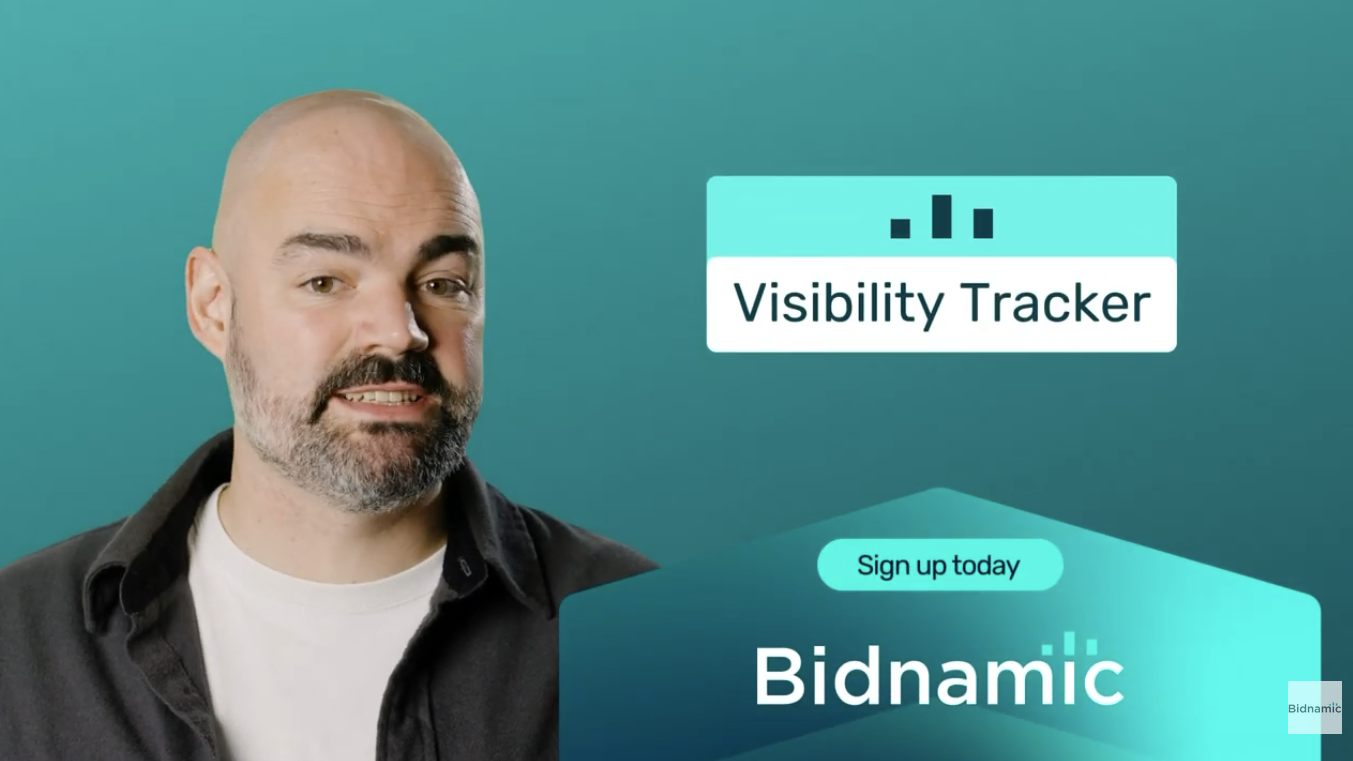
Bidnamic is a Google Shopping platform that uses AI to help ecommerce brands get more from their ad spend. Founded in 2018, its AI optimises bids at the individual product level, with the company claiming clients see an average 39% reduction in cost-per-click. In 2022 it expanded to the US, opening an office in Austin, Texas, following a £4 million investment from Gresham House Ventures.
Its latest product, the Visibility Tracker, addresses what CEO Liam Patterson calls the limitations of Google’s own tools. “Google Auction Insights can be way too limited,” he said on LinkedIn. “We built a visibility tracker: plug in key search terms, see your visibility, check competitors, and make smarter decisions on clicks, cost, and revenue.”
The tool lets users see where competitors are appearing on specific products and search terms — data Patterson says Google’s own reporting doesn’t surface.
9. Vepple

Choosing a university is one of the biggest decisions a young person makes, and most do their initial research online. Vepple is trying to improve that experience. Its platform lets universities build personalised, interactive virtual campus tours – the kind where students can explore specific spaces relevant to their course, rather than sitting through a generic highlights reel.
More than 30 universities use it, and more than half a million students have explored campuses through it, according to its maker. Jamayla, a 17-year-old performing arts student from Leeds, used Vepple to explore the University of Salford before her open day. “When I visited in person at their open day, it was exactly the same. That moment of ‘oh wow, it matches’ helped me trust Salford straight away,” she wrote on Vepple’s website.
10. Audacia

Audacia is a tech consultancy that helps organisations improve, scale and innovate through technology. The company takes a pragmatic view on AI – arguing that not every problem requires it.
The company has blogged about how statistical and mathematical techniques often outperform machine learning where data is limited, interpretability matters, or the marginal gain doesn’t justify the added complexity. “Start small,” the company advises. “Simpler solutions can be easier to deploy within existing data infrastructure and often easier to integrate into decision processes.”
That approach hasn’t held it back. Audacia was named Best Place to Work at the UK IT Industry Awards, with thanks given to BCS, The Chartered Institute for IT, and Computing for the recognition. It has also been shortlisted for AI Innovation of the Year at the National Technology Awards for its work with the Medicines and Healthcare products Regulatory Agency.
11. Vet-AI

Vet-AI was founded in 2019 to address the accessibility and affordability of quality pet care. The pet population is growing and vets are burning out. Co-founded by two leading UK veterinary practitioners, the company is based in the University of Leeds’s £40 million innovation hub.
Joii is the company’s pet care telemedicine app that has delivered over 400,000 consultations. The platform recently transitioned from a decision tree to a large language model built on retrieval-augmented generation, drawing on nearly half a million real conversations between pets and clinicians. The new AI triage system went live after 10 weeks of development and is operating at 81% clinical accuracy. Vet-AI claims it has cut online vet consultation times by 8%.
The company is also developing computer vision tools trained on over 100,000 labelled images and videos — including a gait mobility checker that can assess a dog’s joint health from a seven-second video, and a skin model that identifies issues from a single image upload. Its digital clinical trials platform claims up to a 40% cost saving over traditional research methods, with a disengagement rate below 3% once participants are onboarded.
12. Seeai
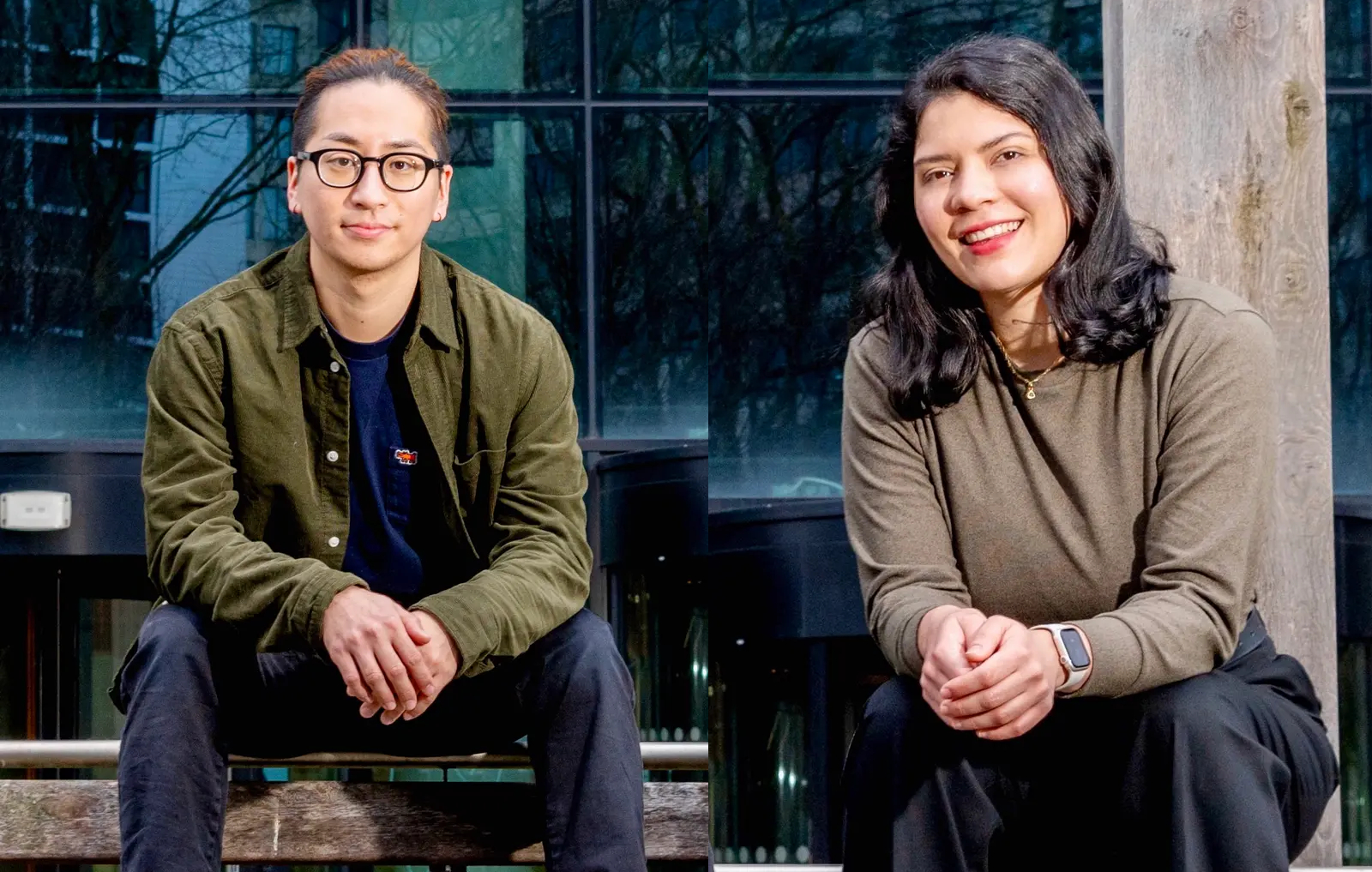
Seeai makes apps and AI systems for businesses, and says it has helped more than 50 companies launch and grow. It was co-founded by Reo Ogusu and Saile Villegas, both recipients of the UK’s Global Exceptional Talent visa.
Its clients span industries. It built BOB AI for outdoor advertising operator 75Media, developed an LLM-powered agent to automate product data research for WrangleWorks, and created an AI system that generates hyper-personalised brochures for surveying equipment company SCCS, part of Hexagon.
University sector startup KEVRI came to Seeai for a knowledge exchange platform, and secured contracts with three UK universities within three months of development.
13. Parallax
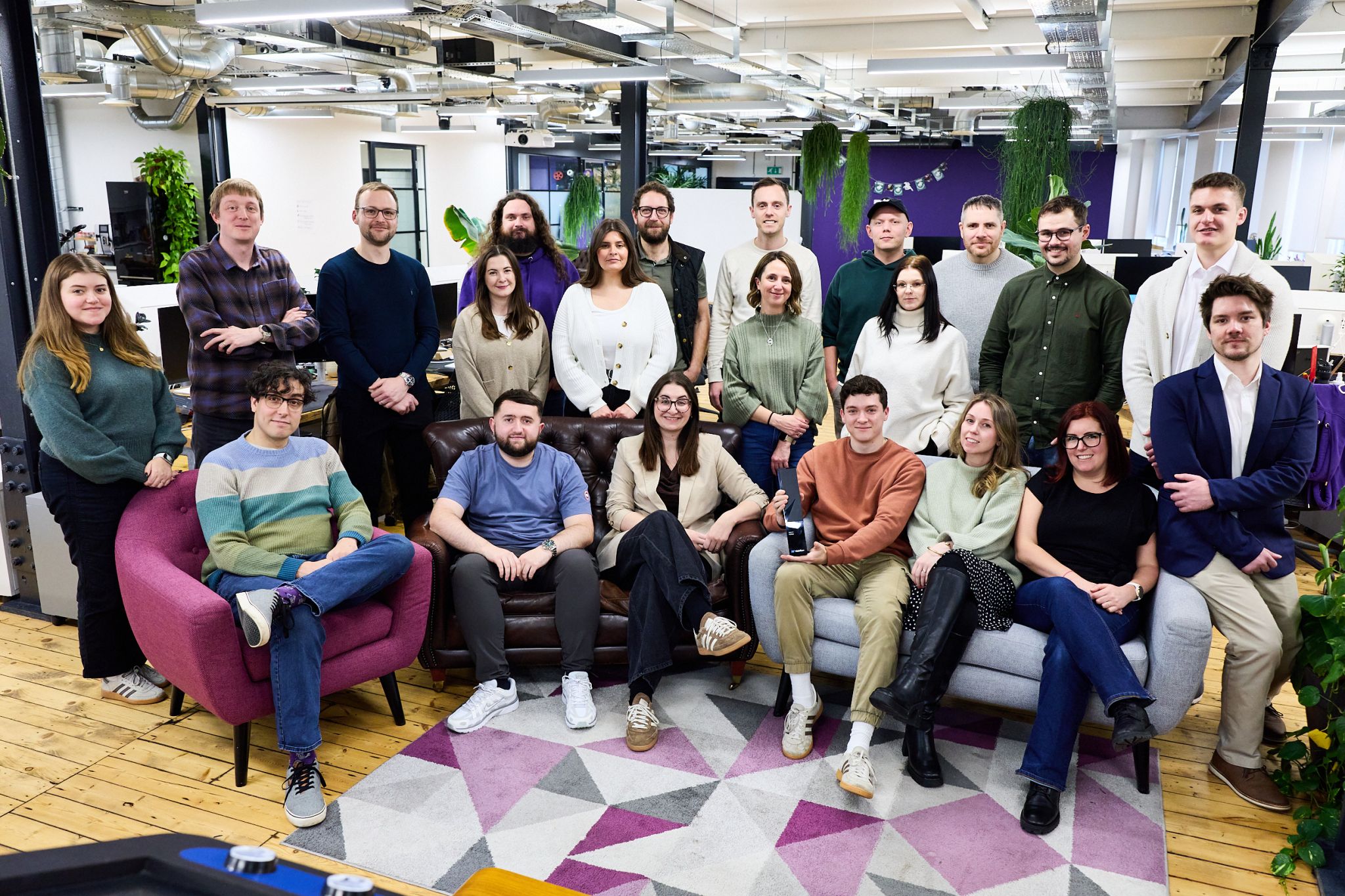
Parallax has been building digital products from Leeds since 2010. Its work spans software engineering, product consulting and AI development, with clients including Visa, NASA, Nike, Unilever and the NHS.
The company had its strongest year to date in 2025, securing 25 new clients and generating a third of its revenue from overseas, including two Norwegian unicorn businesses. AI-led projects now account for 36% of total revenue. Co-founder Dario Grandich said the company can “demonstrate meaningful progress in a single day” — a claim the team has backed up with projects ranging from software for a smart grow-your-own salad farm to predictive AI for environmental management and sports trading.
In terms of the direction AI is headed in, Parallax has warned that agentic AI – systems that can act autonomously on behalf of users — should never be treated as hands-off. Its own deployments include a case where AI cut errors in customer liability group assignment by 6% compared to human teams, processing thousands of records in 10 minutes against more than a month of human review.
14. Abstract Group
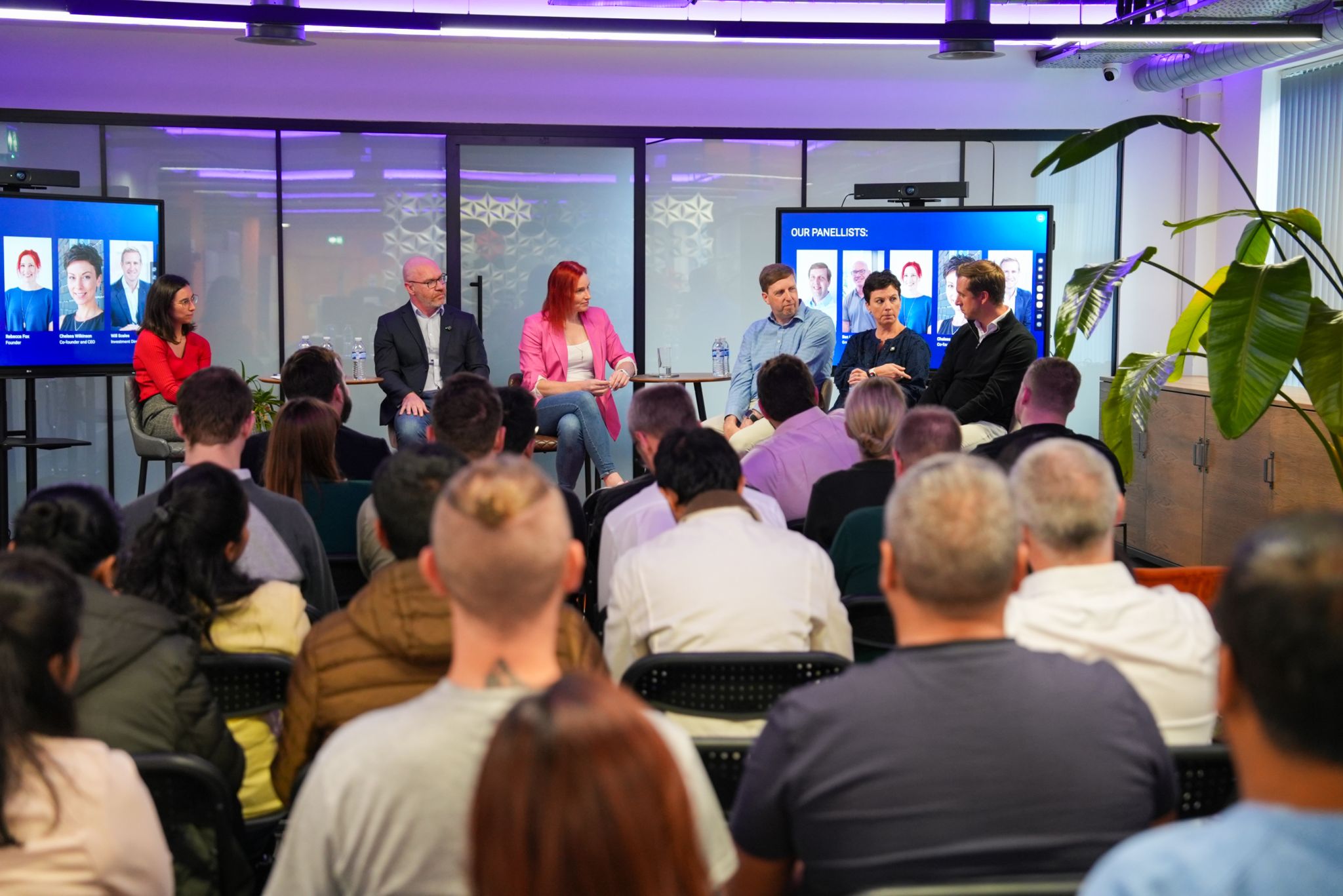
Abstract Group is a tech consultancy that started in Bradford and built its presence in Leeds, where it opened its headquarters on The Calls in the city centre. In 2024, the company opened a regional headquarters in Riyadh, having worked in the Saudi market since 2011. AI could contribute over $135 billion to Saudi Arabia’s GDP by 2030, according to PwC.
Much of Abstract’s work – in both markets – centres on helping organisations bridge the gap between AI strategy and AI execution. The consultancy’s assessment process maps an organisation’s data, governance, infrastructure, and operating models to help prioritise initiatives that are both achievable and strategically aligned.
15. Antonym Industries

Rev Murugesan didn’t set out to build Antonym Industries – he ran out of ways not to. Over five years he founded three companies – designing titanium parts for electric vehicles, building an aerospace jet engine, then digitising the supply chain that connected them. Each one hit the same problem from a different angle. The factory floor, the last step where everything digital met everything physical, remained stubbornly unprogrammable.
“Trying to fix manufacturing with software,” he wrote, “is like putting a Ferrari engine in a horse-drawn carriage — you’ll just tear the wheels off.” Antonym Industries is his answer: a network of autonomous micro-factories, software-defined and deployable like cloud compute. One to watch